

Haiku Scrolls
We offer each scroll in several different fonts. Select the scroll and then select the font you would like to see.
Showing all 34 results
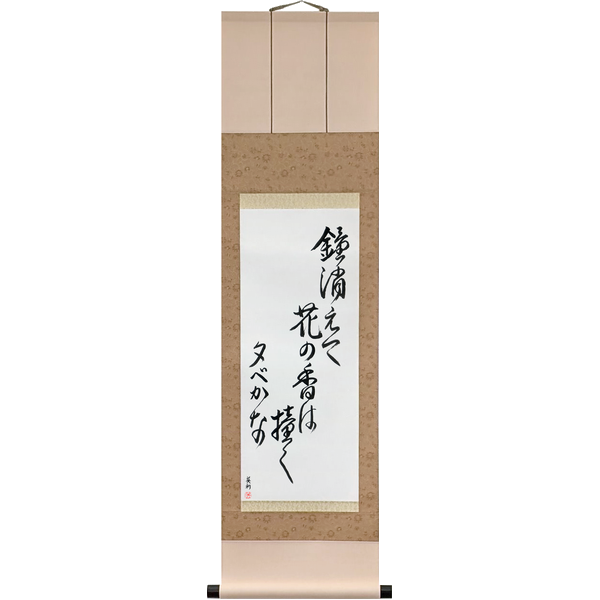
Bashō - As the temple bell fades, The ringing lingers in the blossom scent, Evening (kane kiete hana no ka wa tsuku yuube kana)
$220
Haiku by Bashō on a traditional Japanese Scroll by Master Eri Takase.

Bashō - How admirable, to see lightning, and not think life is fleeting (inazuma ni satoranu hito no tattosa yo)
$220
Haiku by Bashō on a traditional Japanese Scroll by Master Eri Takase.
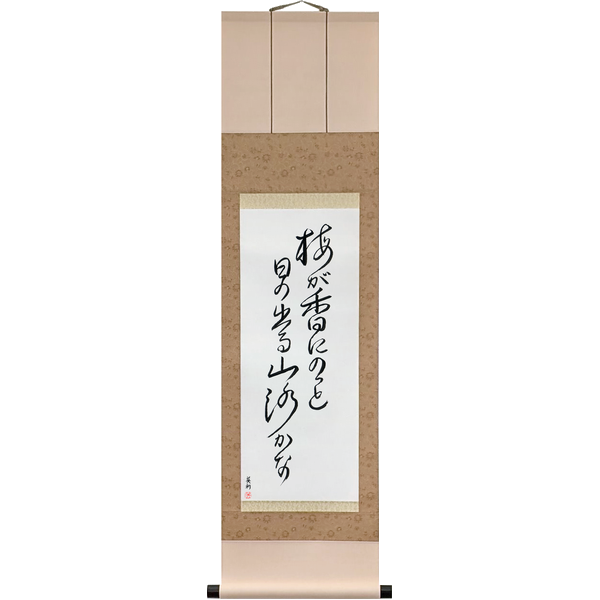
Bashō - In the plum blossom scent, the sun pops out, a mountain path (mume ga ka ni notto hi no deru yamaji kana)
$220
Haiku by Bashō on a traditional Japanese Scroll by Master Eri Takase.

Bashō - Not spilling the glistening dew, the bush clover, undulating (shiratsuyu wo kobosanu hagi no uneri kana)
$220
Haiku by Bashō on a traditional Japanese Scroll by Master Eri Takase.
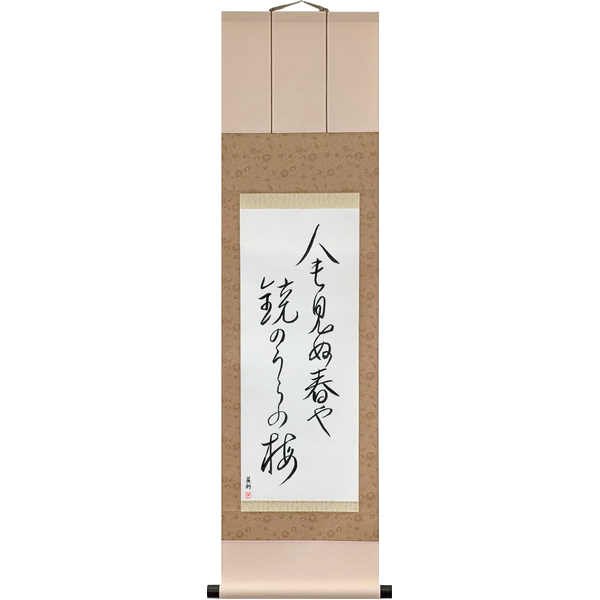
Bashō - On the back of the mirror, A spring unseen, A flowering plum-tree (hito mo minu haru ya kagami no ura no ume)
$220
Haiku by Bashō on a traditional Japanese Scroll by Master Eri Takase.

Bashō - Shake even the grave, My wailing is the autumn wind (tsuka mo ugoke waga naku koe wa aki no kaze)
$220
Haiku by Bashō on a traditional Japanese Scroll by Master Eri Takase.
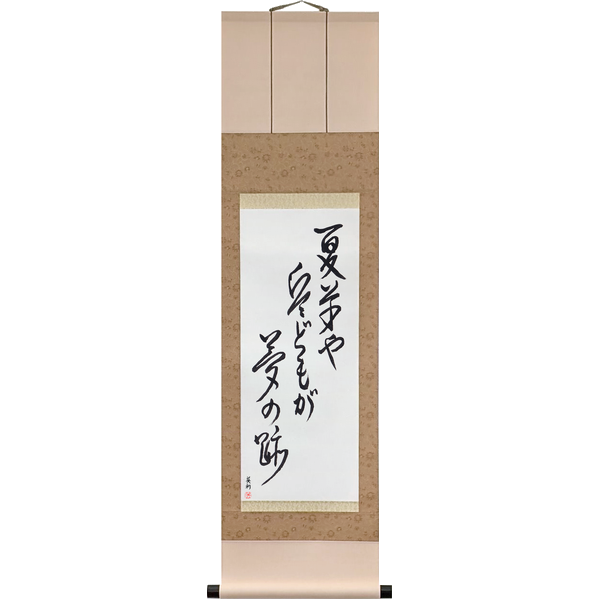
Bashō - Summer grass, all the warriors are, but the remains of dreams (natsukusa ya tsuwamono domo ga yume no ato)
$220
Haiku by Bashō on a traditional Japanese Scroll by Master Eri Takase.
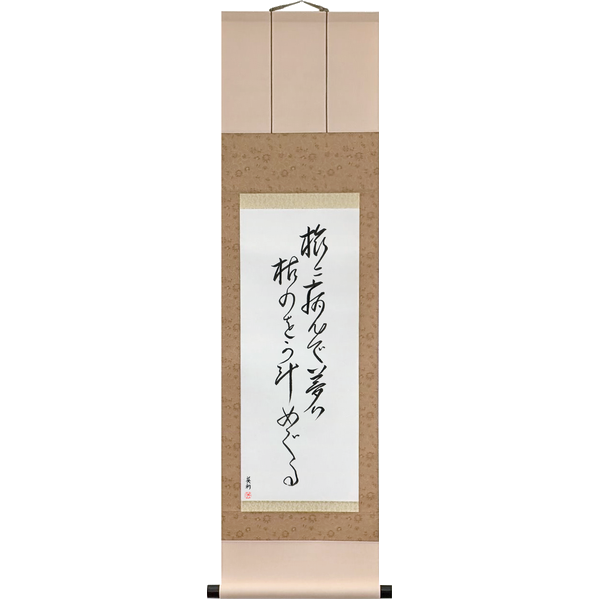
Bashō - Taken ill on my travels, My dreams roam over the withered moors (tabi ni yande yume wa kareno wo kake meguru)
$220
Haiku by Bashō on a traditional Japanese Scroll by Master Eri Takase.
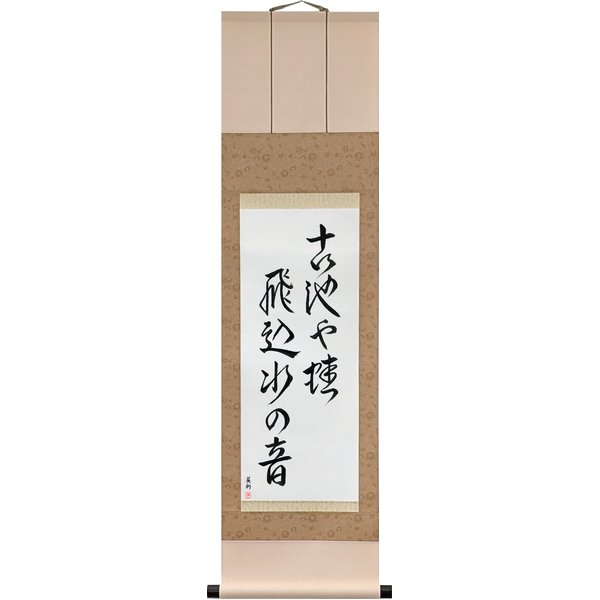
Bashō - The old pond, a frog jumps in, the sound of water (furu ike ya kawazu tobikomu mizu no oto)
$220
Haiku by Bashō on a traditional Japanese Scroll by Master Eri Takase.
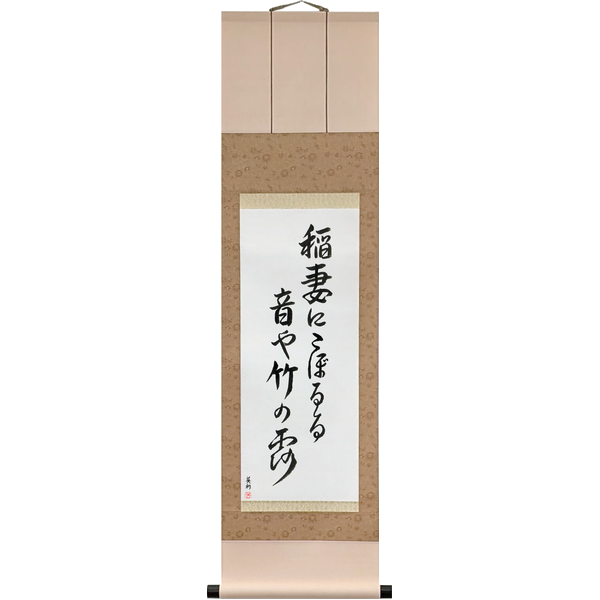
Buson - A flash of lightning, The sound of dew, Dripping down the bamboos (inazuma ni koboruru oto ya take no tsuyu)
$220
Haiku by Buson on a traditional Japanese Scroll by Master Eri Takase.

Buson - An evening orchid, Hidden in its scent, The flower's whiteness (yoru no ran ka ni kakurete ya hana shiroshi)
$220
Haiku by Buson on a traditional Japanese Scroll by Master Eri Takase.
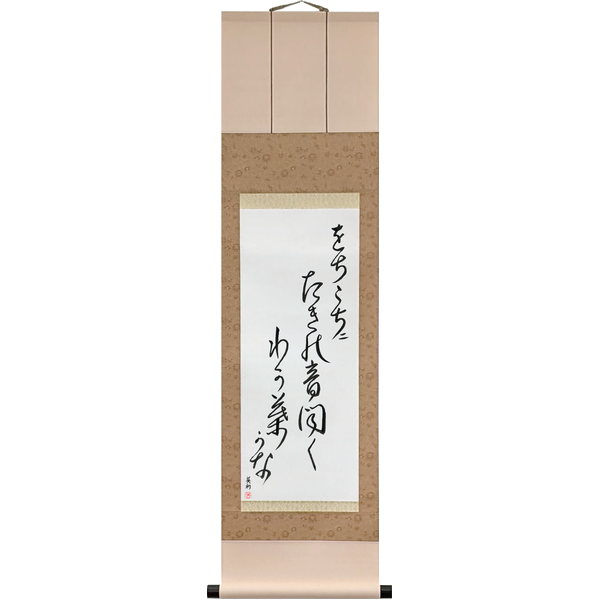
Buson - From far and near, Hearing the sounds of waterfalls, Young leaves (ochikochi ni taki no oto kiku wakaba kana)
$220
Haiku by Buson on a traditional Japanese Scroll by Master Eri Takase.

Buson - In loneliness, there is joy too, An autumn eve (sabishisa no ureshiku mo ari aki no kure)
$220
Haiku by Buson on a traditional Japanese Scroll by Master Eri Takase.
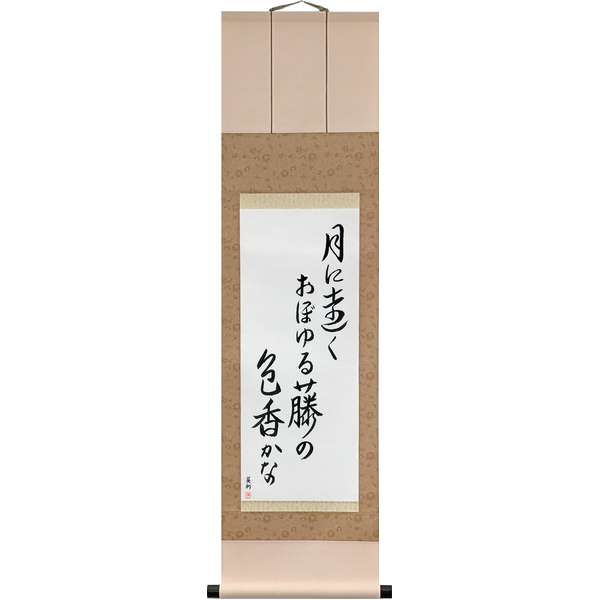
Buson - In the moonlight, the color and scent of the wisteria, seems so far away (tsuki ni tōku oboyuru fuji no iroka kana)
$220
Haiku by Buson on a traditional Japanese Scroll by Master Eri Takase.

Buson - In the spring rain, The pond and the river, Have become one (ike to kawa hitotsu ni narinu haru no ame)
$220
Haiku by Buson on a traditional Japanese Scroll by Master Eri Takase.
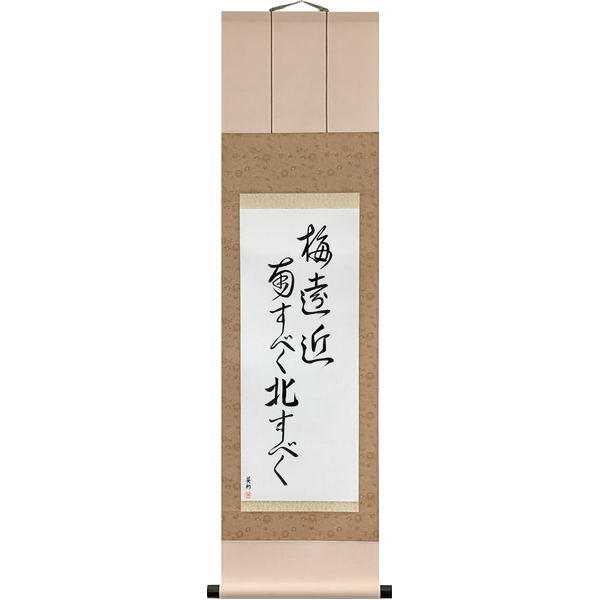
Buson - Plum blossoms everywhere, I should go south, I should go north (ume ochikochi minami subeku kita subeku)
$220
Haiku by Buson on a traditional Japanese Scroll by Master Eri Takase.

Buson - The long slow days of spring, piling up, so far away the past (osoki hi no tsumorite tōki mukashi kana)
$220
Haiku by Buson on a traditional Japanese Scroll by Master Eri Takase.

Buson - The spring sea, all day rising and falling, rising and falling (haru no umi hinemosu notari notari kana)
$220
Haiku by Buson on a traditional Japanese Scroll by Master Eri Takase.
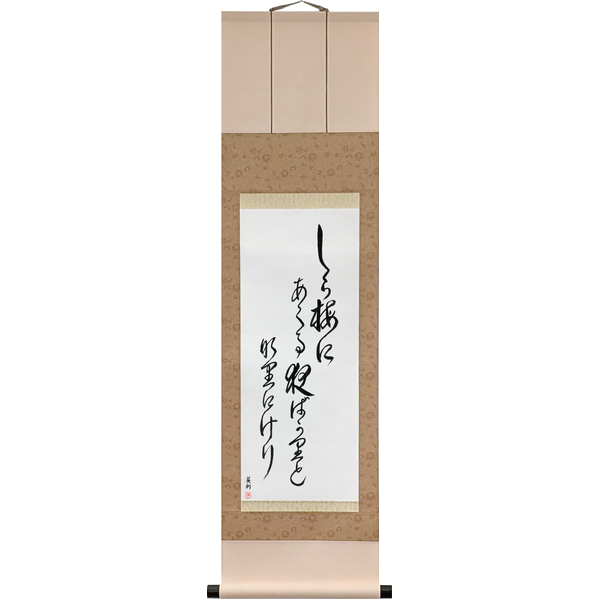
Buson - To white plum blossoms, Each night just dawning, Evermore (shiraume ni akuru yo bakari to nari ni keri)
$220
Haiku by Buson on a traditional Japanese Scroll by Master Eri Takase.

Chiyojo - My little dragonfly hunter, where has he gone today, I wonder (tonbo-tsuri kyō wa doko made itta yara)
$220
Haiku by Chiyojo on a traditional Japanese Scroll by Master Eri Takase.

Chiyojo - To the person breaking off the branch, giving its fragrance, the plum blossom (taoraruru hito ni kaoru ya ume no hana)
$220
Haiku by Chiyojo on a traditional Japanese Scroll by Master Eri Takase.
Custom Haiku Calligraphy
$280
Work with Master Takase and create an original custom haiku calligraphy work of art. Use your favorite haiku or your own poem (and we will work with you on the translation).
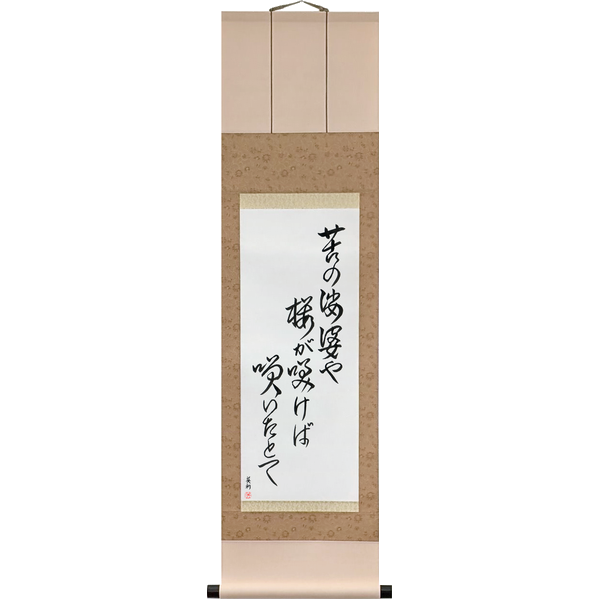
Issa - A world of grief and pain, Flowers bloom, Even then (ku no shaba ya sakura ga sakeba saita tote)
$220
Haiku by Issa on a traditional Japanese Scroll by Master Eri Takase.
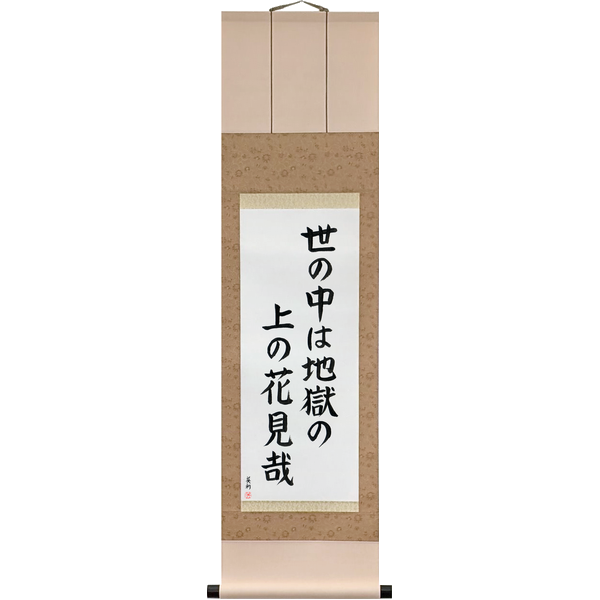
Issa - In this world of ours, We walk above hell, Gazing at flowers (yo no naka wa jigoku no ue no hanami kana)
$220
Haiku by Issa on a traditional Japanese Scroll by Master Eri Takase.

Issa - Snail, ever so slowly climb, Mt Fuji (katatsuburi sorosoro nobore fuji no yama)
$220
Haiku by Issa on a traditional Japanese Scroll by Master Eri Takase.
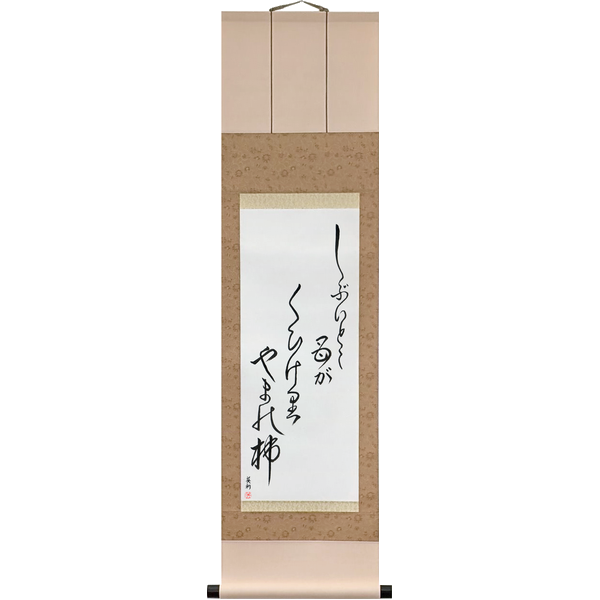
Issa - The bitter part, eaten by the mother, mountain persimmon (shibui toko haha ga kui keri yama no kaki)
$220
Haiku by Issa on a traditional Japanese Scroll by Master Eri Takase.

Issa - This dewdrop world, is a dewdrop world, and yet (tsuyu no yo wa tsuyu no yo nagara sari nagara)
$220
Haiku by Issa on a traditional Japanese Scroll by Master Eri Takase.

Issa - Were my father here, At dawn we would gaze, Over the green fields (chichi arite akebono mitashi aotabara)
$220
Haiku by Issa on a traditional Japanese Scroll by Master Eri Takase.

Ryōkan - The thief, left behind, the moon in my window (nusubito ni torinokosareshi mado no tsuki)
$220
Haiku by Ryōkan on a traditional Japanese Scroll by Master Eri Takase.
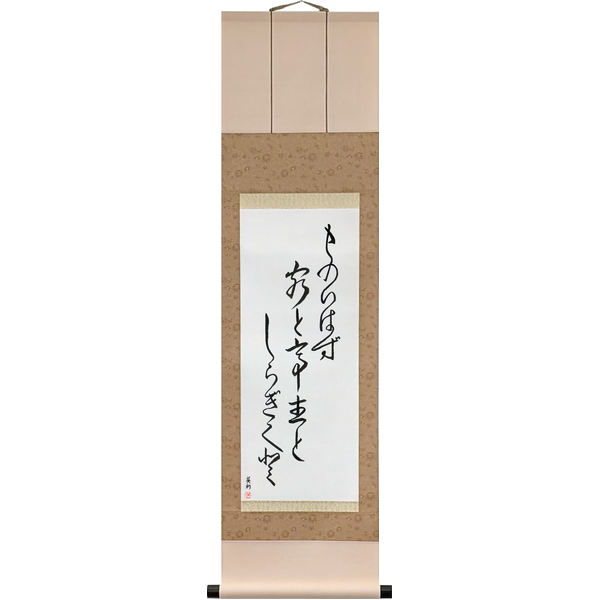
Ryōta - They spoke no words, The visitor the host, And the white chrysanthemum (mono iwazu kyaku to teishu to shiragiku to)
$220
Haiku by Ryōta on a traditional Japanese Scroll by Master Eri Takase.

Shiki - A pear tree is blooming, By a collapsed house, on an old battlefield (nashi saku ya ikusa no ato no kuzure ie)
$220
Haiku by Shiki on a traditional Japanese Scroll by Master Eri Takase.

Shiki - Lifting up the hatchet, To cut it down, It was budding (nata agete kiran to sureba konome kana)
$220
Haiku by Shiki on a traditional Japanese Scroll by Master Eri Takase.
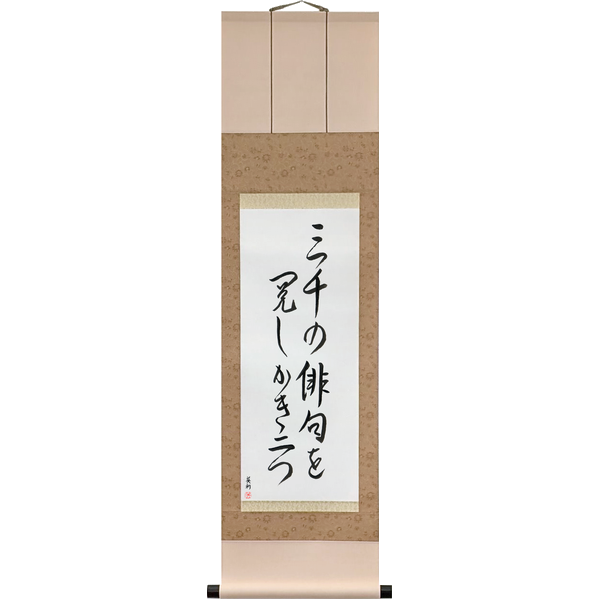
Shiki - Three thousand, Haiku to examine, Two persimmons (sanzen no haiku wo kemishi kaki futatsu)
$220
Haiku by Shiki on a traditional Japanese Scroll by Master Eri Takase.
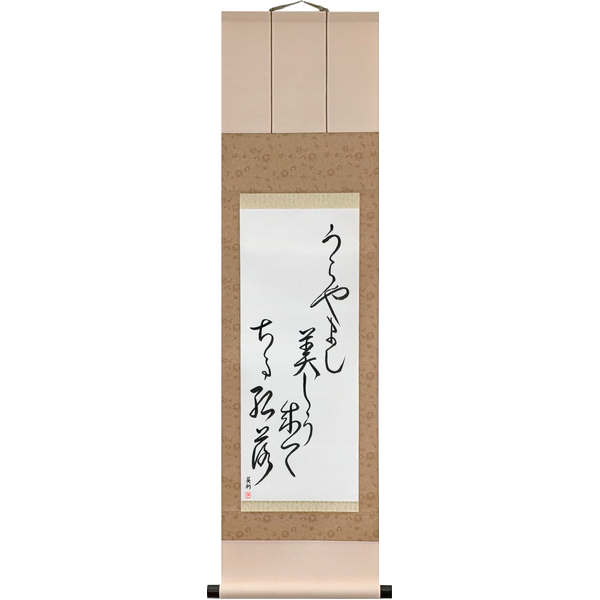
Shikō - How enviable, Turning beautiful then falling, maple leaves (urayamashi utsukushū natte chiru momiji)
$220
Haiku by Shikō on a traditional Japanese Scroll by Master Eri Takase.