

Names in Japanese by Master Calligrapher Eri Takase
Welcome to the most extensive, well-researched and free Names in Japanese search tool on the Internet. We are unique because we translate based on how a name is pronounced, not how it is spelled. This is the only correct way to translate names to Japanese. We have translations for English, French, Italian, Spanish, Portuguese, among other languages — each with their own proper Japanese translation. Learn more about our methodologies or simply see for yourself:
We also have hand-brushed, high-resolution PDFs of the name perfect for crafts and personal use.


You will also find the translations brushed in Japanese calligraphy by Master Japanese Calligrapher Eri Takase. With an order you will receive a high-resolution PDF carefully documented and including the hand-brushed art and line art. Click on an image to see an actual sample. Then search for a name or create your own translation — ordering is easy and your download is immediate.
These examples are of Amy in Japanese. Click to see actual PDFs of Master Takase's art.


Below we describe each of the Name in Japanese designs we offer.
Name in Kana

Japanese has two phonetic scripts called kana, and your name can be written in either — though katakana is the standard for foreign names. Katakana was extended in modern times to represent sounds not found in native Japanese, like the “v” in Vivian. Hiragana was left largely unchanged, so some sounds must substitute — V becomes B, for example. Katakana also carries a signal: a Japanese reader seeing ハイ assumes a foreign word or name, while はい in hiragana reads as the Japanese word for “yes.” Hiragana has flowing, curved strokes — the poetesses of the Heian era created it — and many choose it for its softer aesthetic, especially in cursive calligraphy. Both are correct, but katakana was purposely extended to rendered non-Japanese names and words into Japanese and so is the standard.
Name and Phrase
Pairing a name with the kanji for “life” is a tradition that goes back centuries in Japan. Japanese dictionaries note an older meaning of 命 (inochi, “life”): paired tattoos on the arms of lovers, a declaration of unwavering devotion. Our phrase designs draw from this tradition — your name in kana composed with a kanji phrase like “is My Life,” “is My Love,” or “is My Soulmate.” The result is a personal statement rooted in Japanese tradition.

Thank you Britt and Mayumi for sharing this special picture
Meaning
Names have meaning (see What Your Name Means) — Amy means “beloved” which is 最愛, read saiai, Rudolph means “famous wolf”, Greenfield means “green field”. This is a great option when the meaning of the name is the most important aspect.
Name and Meaning
Names have a pronunciation and many times a known meaning. These Name and Meaning designs capture both. This sample is of the name Amy meaning "Beloved" where Amy is in katakana エイミー (eimi-) and the meaning “Beloved” is in kanji 最愛 (saiai).
Names Written in Japanese
The sections above introduce how names are translated to Japanese — phonetic scripts, sound substitution, phrase traditions, and meaning in kanji. If you want to go deeper — why names change shape between languages, how pronunciation determines the translation, and how to choose between methods — we cover each in detail in our full guide: How to Write Names in Japanese
Related Products

Full Name in Japanese
Your complete name — first, middle, last — hand-brushed by Master Takase on a single design.
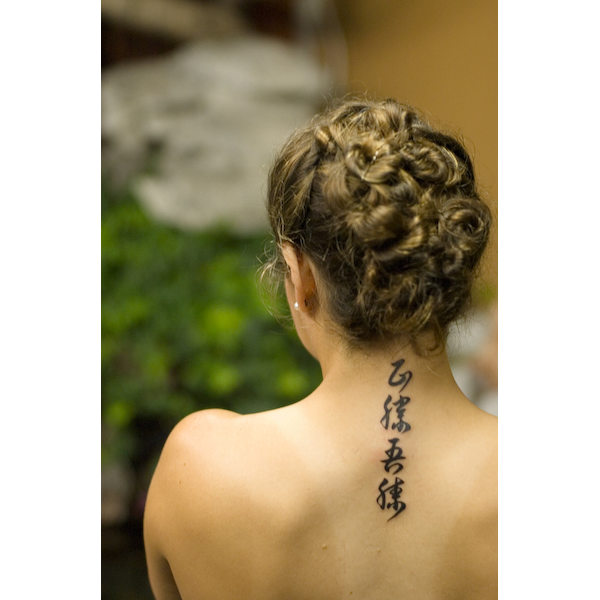
Custom Japanese Tattoos
Work directly with Master Calligrapher Eri Takase to create a completely custom Japanese tattoo design.
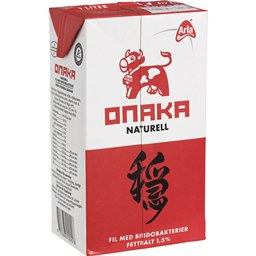
Commercial Calligraphy
License Master Takase's calligraphy for commercial products, publications, and media.

Learn Japanese Calligraphy
Free calligraphy lessons by Master Takase — video demonstrations, student critiques, and printable samples.